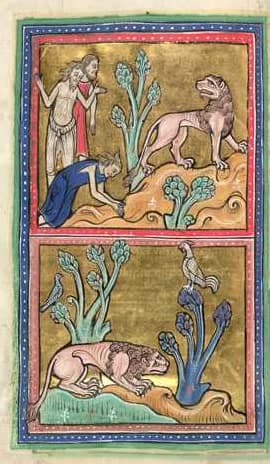
The Lion, King of Beasts
Two intertwined legends on one gold-ground folio — the roar that revives, the tail that erases the trail.
- Work
- Bestiary (Rochester Bestiary)
- Artist / creator
- Unknown English illuminator (made for the Benedictine priory of St Andrew, Rochester)
- Origin & date
- Rochester, England, c. 1230
- Held by
- The British Library
Format
The full-resolution color-managed file — yours to print, study, and keep.
Sized to protect print quality — this scan's resolution doesn't clear our floor for a physical print, so this piece is offered as a digital download only.
Size
$24.00
The story
The bestiary's lion opens with two intertwined legends, both illustrated here in a single gold-ground miniature: above, a lioness gives birth to cubs that lie dead for three days, until the father lion breathes into their faces and roars them back to life — read throughout the Middle Ages as a direct type of Christ's Resurrection, sealed in the tomb three days before rising. Below, a lion flees hunters across open ground, dragging its tail behind it to sweep away its own pawprints, erasing the trail before it can be followed — medieval commentators took this as Christ concealing his divine nature at the Incarnation, walking among men untraceable until he chose to be known. Made around 1230 for the Rochester priory, this is one of the most theologically dense pages in the bestiary tradition, two lion legends doing the work of a Gospel argument.
About this reproduction
- Faithful reproduction of a public-domain work, sourced from The British Library’s open-access release.
- Printed to order on archival cotton-rag stock, pigment inks rated 100+ years.
- Color-managed to the source scan.
- Ships in 5–8 business days; satisfaction guaranteed.
See it framed
Room
Frame
This scan's resolution is offered as a digital download only, so there's no physical size to frame here — shown for reference, true to the piece's own proportions.
From Bestiary & Marginalia
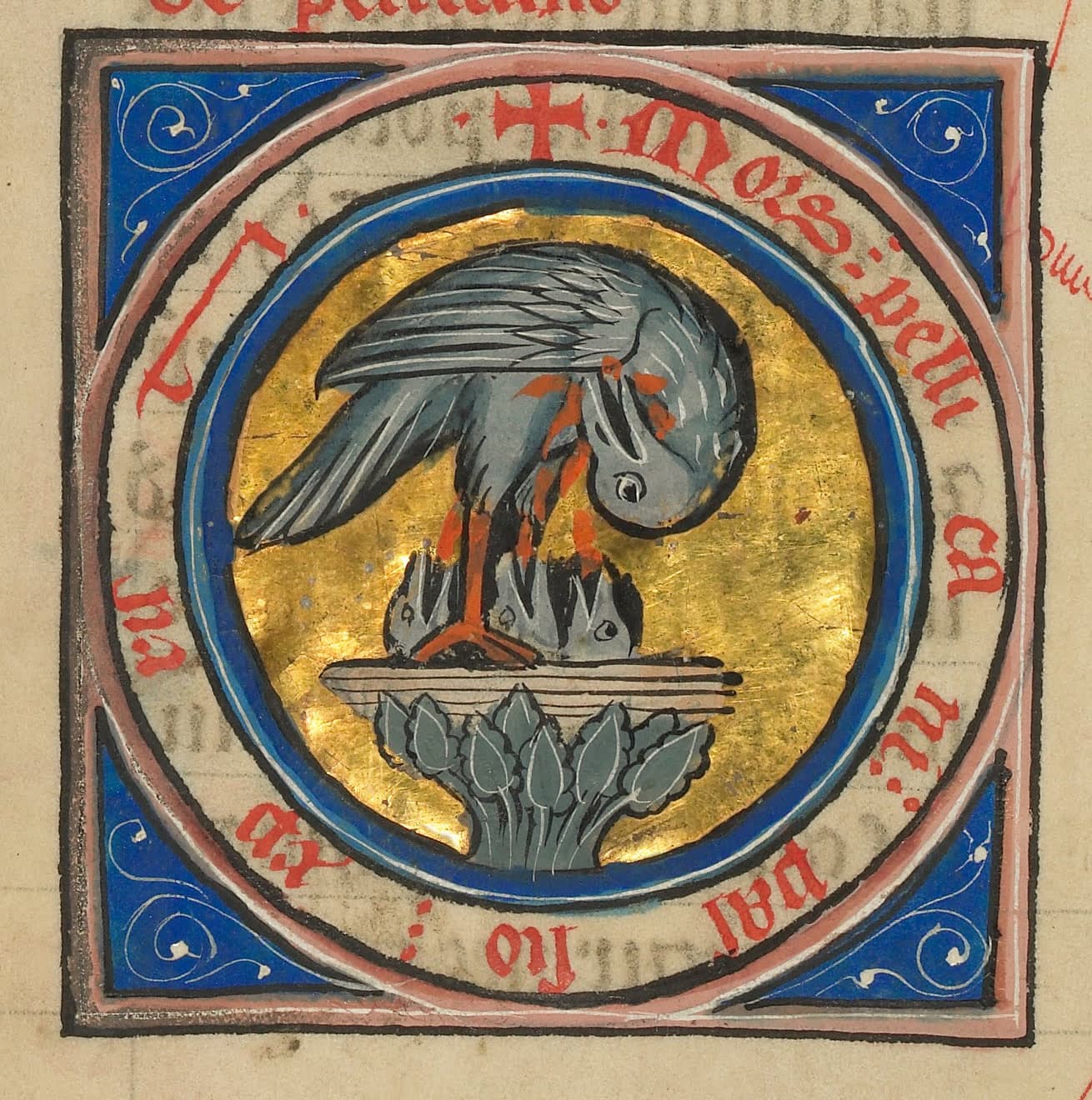
The Pelican in Her Piety
A mother bird wounds her own breast to feed her young with her blood.
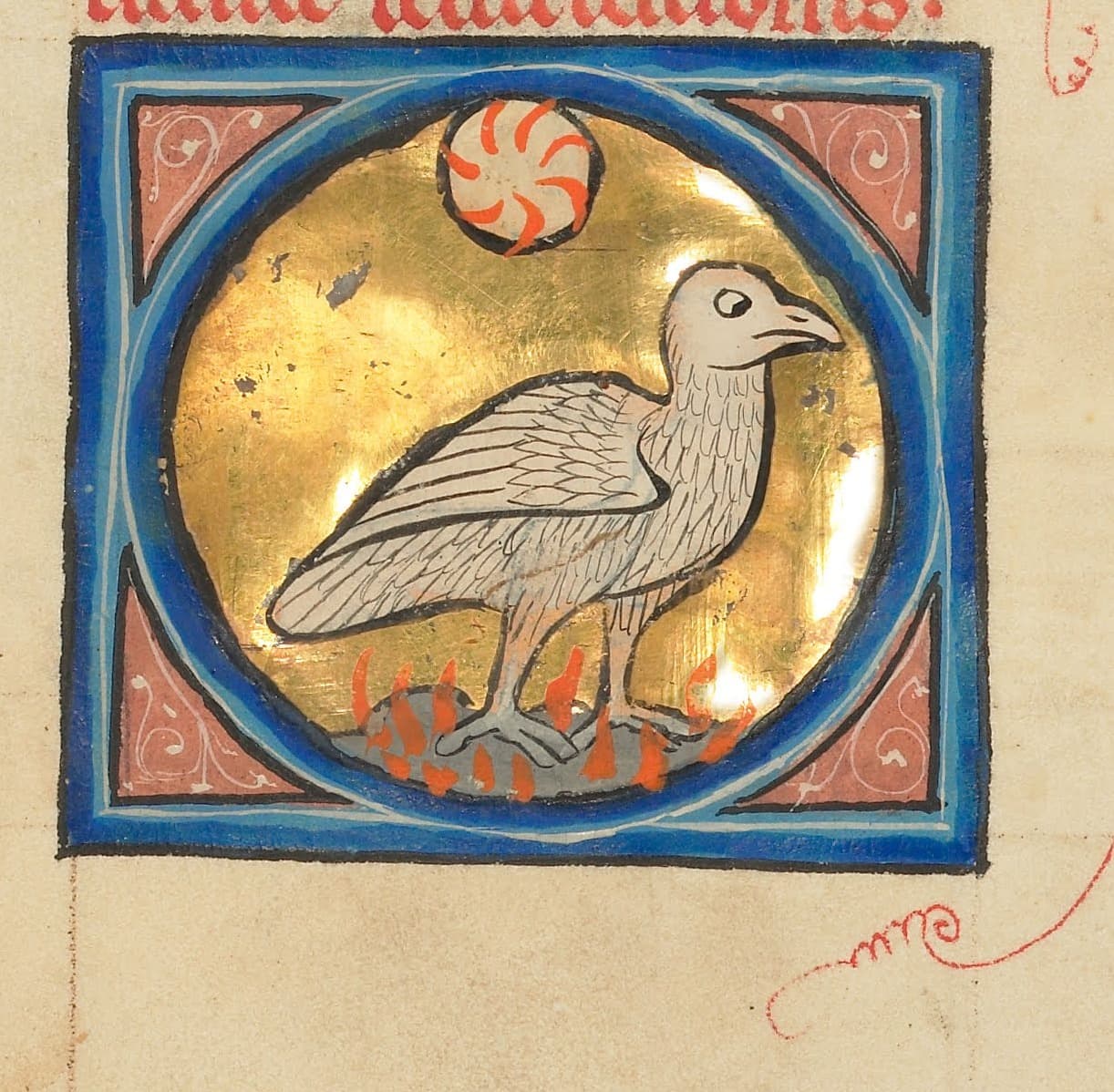
The Phoenix
The bird that builds its own pyre and rises from the ash.
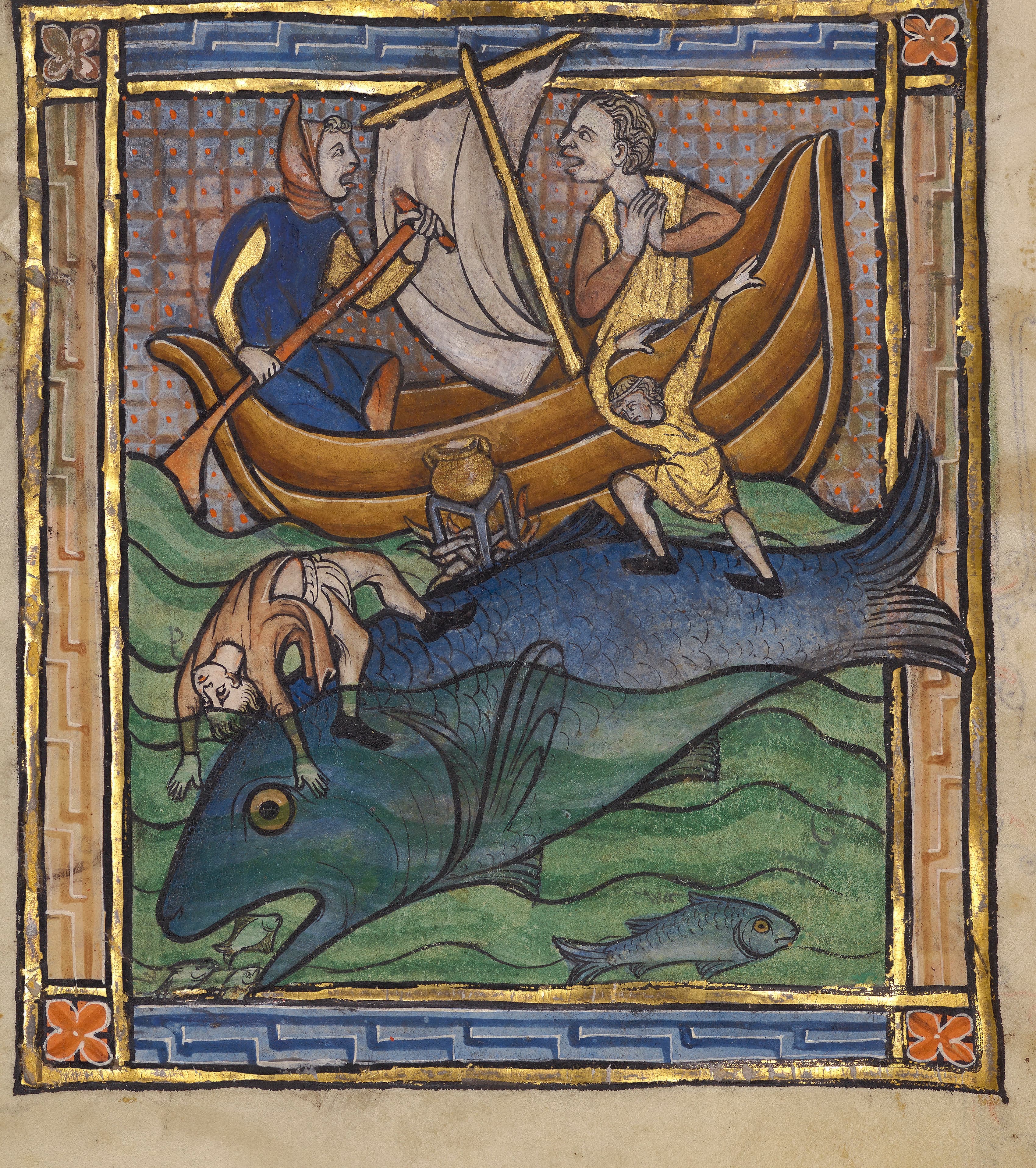
The Whale Mistaken for an Island
Sailors moor on its back mistaking it for land — until it dives.
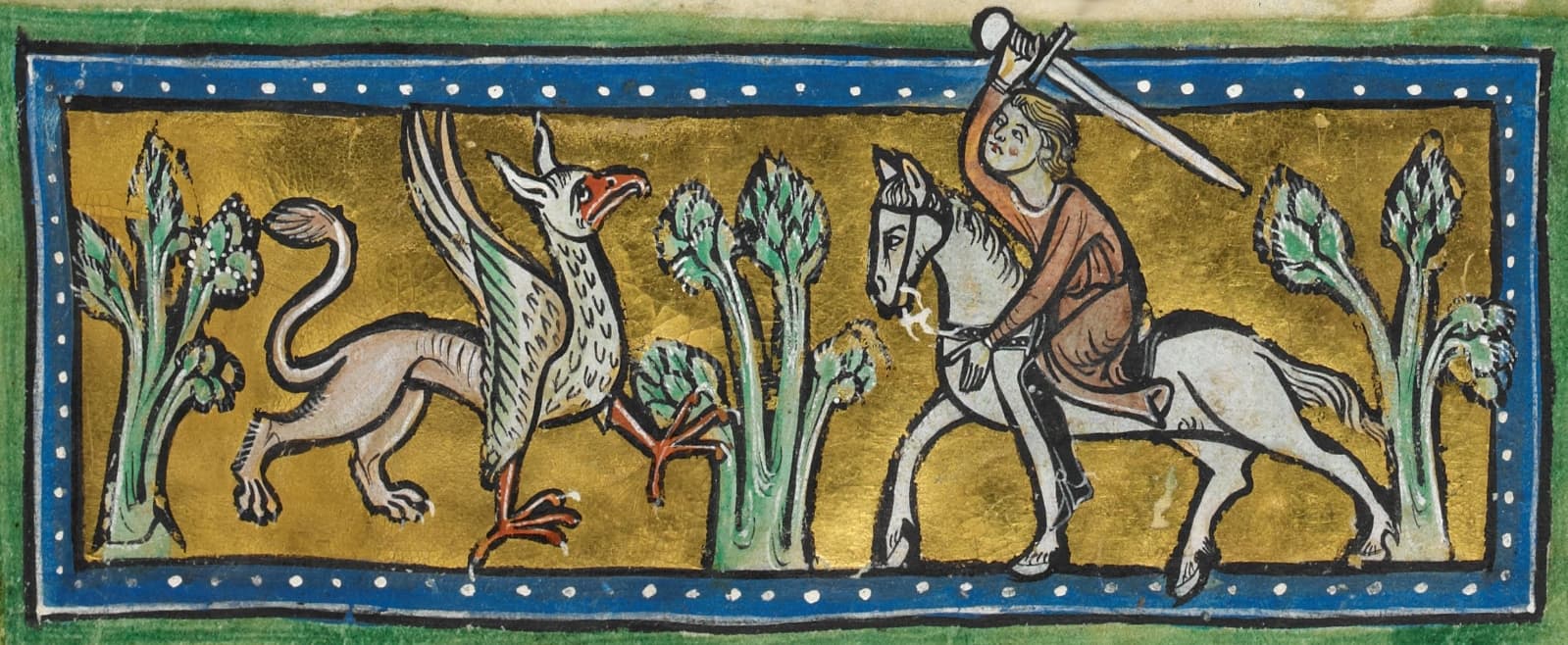
The Griffin, Guardian of Gold
Lion below, eagle above — a hoarder of northern gold, and no coward when confronted.