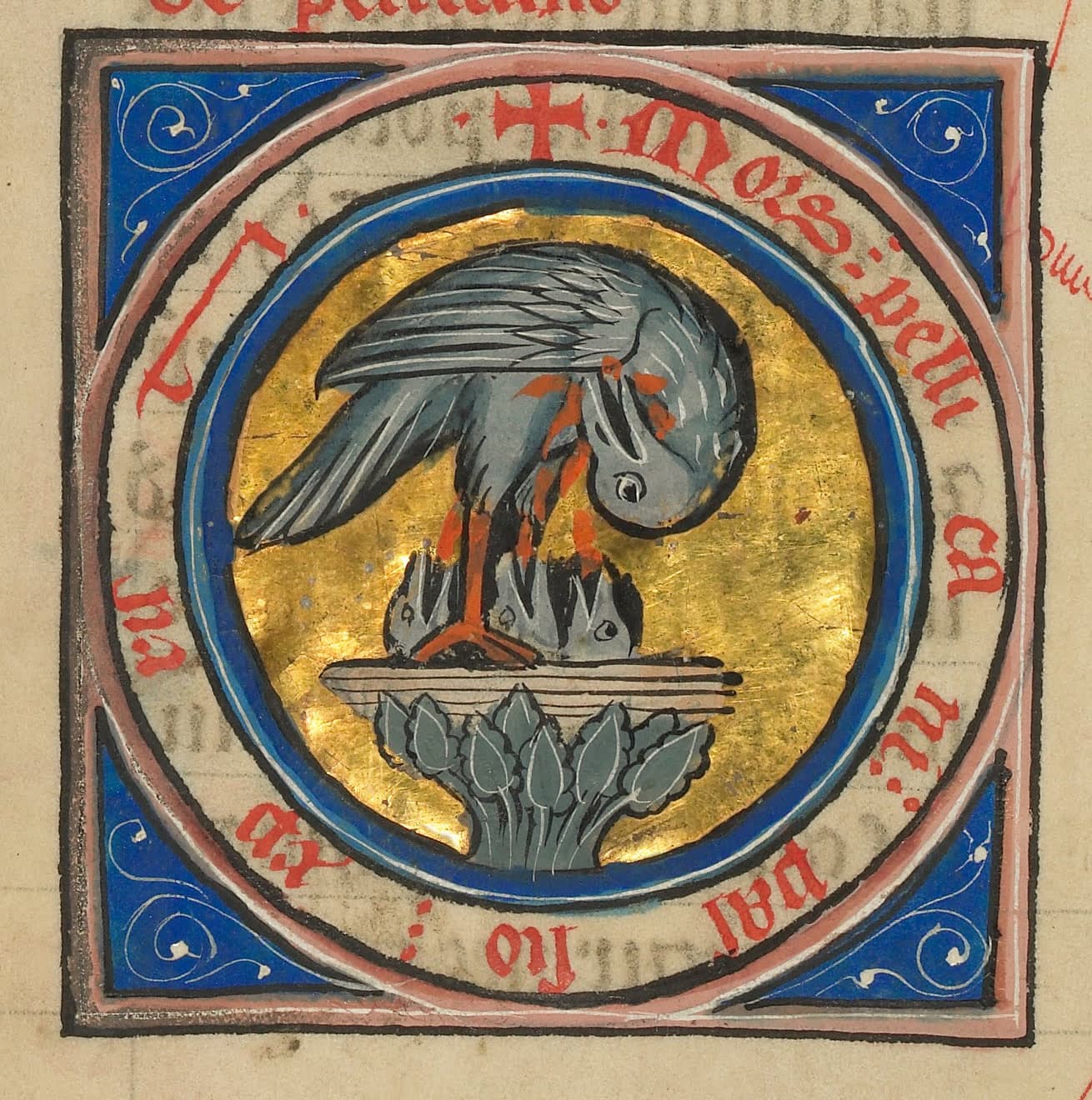
The Pelican in Her Piety
A mother bird wounds her own breast to feed her young with her blood.
- Work
- Bestiary (Bird Book of Hugh of Fouilloy)
- Artist / creator
- Unknown Franco-Flemish illuminator
- Origin & date
- Northern France or Flanders, c. 1270
- Held by
- The J. Paul Getty Museum
Format
The full-resolution color-managed file — yours to print, study, and keep.
Sized to protect print quality — this scan's resolution doesn't clear our floor for a physical print, so this piece is offered as a digital download only.
Size
$24.00
The story
The medieval bestiary's pelican was believed to kill its own chicks in a fit of temper, then, three days later, pierce its own breast and revive them with its blood — a legend read throughout the Middle Ages as a direct allegory of Christ's Passion and the Eucharist, the pelican-in-her-piety becoming one of the most widespread symbols in Christian art, still found on church vestments and heraldry today. This miniature belongs to the Bird Book of Hugh of Fouilloy bound into a Getty manuscript alongside a bestiary proper, rendered in tempera, pen and ink, with true gold leaf catching the page's light exactly where the artist wanted the eye to land. Look for the careful red modeling at the breast wound, the moment the whole legend turns on. It is the bestiary's single most theologically loaded image, natural history entirely in service of devotion.
About this reproduction
- Faithful reproduction of a public-domain work, sourced from The J. Paul Getty Museum’s open-access release.
- Printed to order on archival cotton-rag stock, pigment inks rated 100+ years.
- Color-managed to the source scan.
- Ships in 5–8 business days; satisfaction guaranteed.
See it framed
Room
Frame
This scan's resolution is offered as a digital download only, so there's no physical size to frame here — shown for reference, true to the piece's own proportions.
From Bestiary & Marginalia
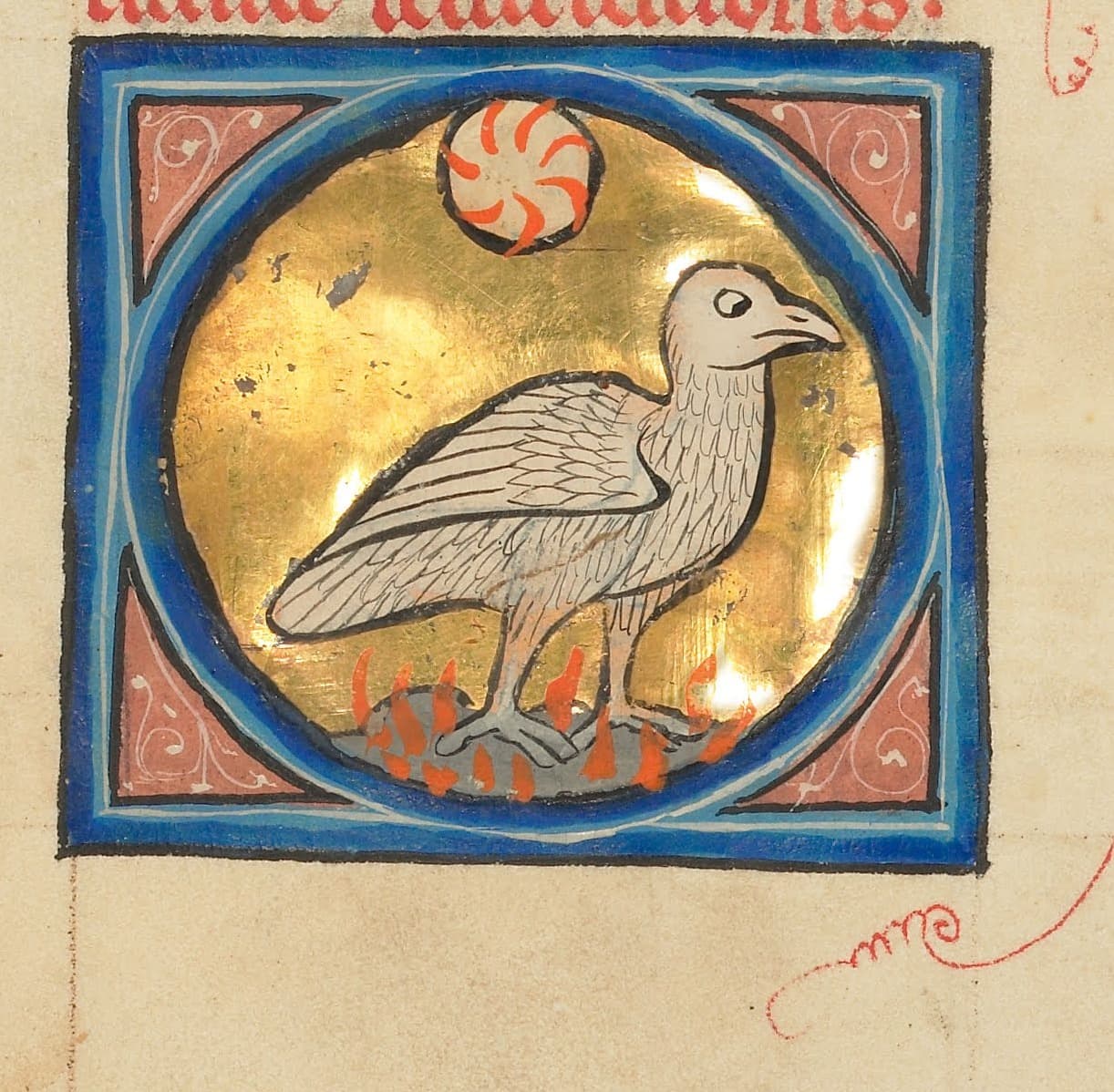
The Phoenix
The bird that builds its own pyre and rises from the ash.
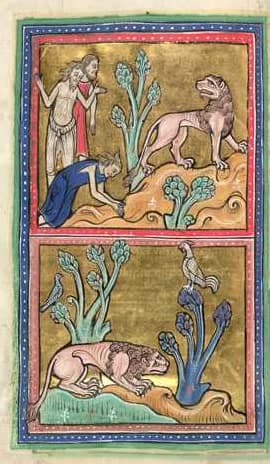
The Lion, King of Beasts
Two intertwined legends on one gold-ground folio — the roar that revives, the tail that erases the trail.
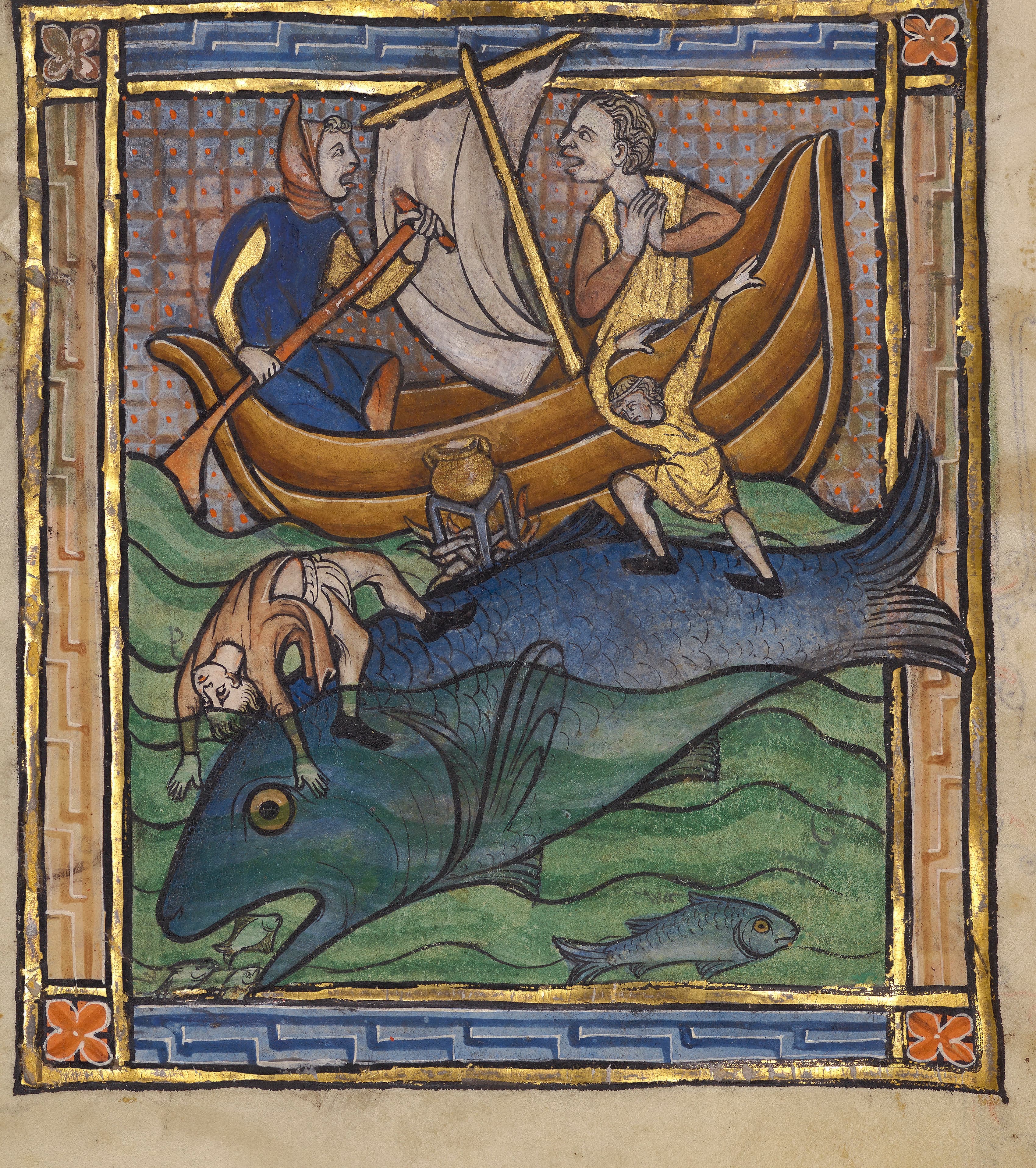
The Whale Mistaken for an Island
Sailors moor on its back mistaking it for land — until it dives.
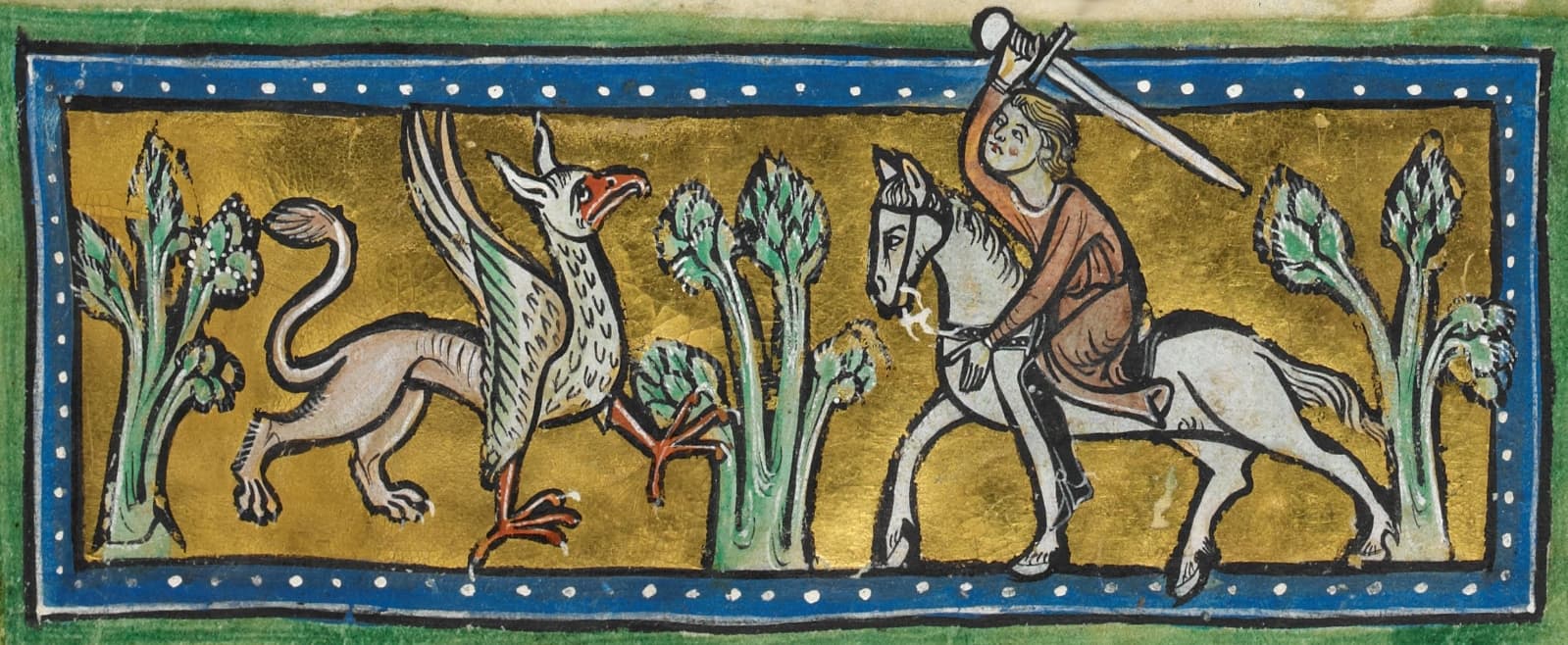
The Griffin, Guardian of Gold
Lion below, eagle above — a hoarder of northern gold, and no coward when confronted.